
ADHD burnout is a state of profound physical, emotional, and cognitive exhaustion that develops when adults with ADHD have been pushed beyond their limits for too long. Unlike ordinary tiredness, ADHD burnout can leave you unable to function — and it matters because research suggests up to 93% of adults with ADHD experience it at some point in their lives, compared with around 30% of the general population. If you have recently found yourself shutting down, struggling with tasks you once managed, or running on empty with no clear explanation, this guide is for you. You will find the warning signs, the causes, and practical ways forward — including how the Dream SMART Framework can support a sustainable recovery.
What Is ADHD Burnout?
ADHD burnout is not the same as ordinary stress or feeling tired after a busy week. It is a neurobiological response — the result of months or years of overextending executive function, masking ADHD symptoms, and operating in environments that were never designed for the ADHD brain.
“ADHD-related burnout is not simply a motivational failure — it is a neurobiological response involving disrupted executive function, emotional regulation, and reward processing that requires structured support to address.”
— NHS England Independent ADHD Taskforce, 2025
Three things tend to drive ADHD burnout more than anything else. The first is masking: the exhausting daily performance of suppressing ADHD traits to appear neurotypical at work, in relationships, and in public. The second is executive function overload: spending enormous cognitive energy on tasks that neurotypical people do automatically — such as organising, prioritising, and managing time. The third is emotional dysregulation: the heightened emotional responses that characterise ADHD, which take significant energy to manage.
The crucial point is that ADHD burnout is cumulative. It rarely arrives suddenly. It builds through years of overextension — and recovery requires more than a holiday or a good night’s sleep.

Why Are Adults with ADHD More Vulnerable to Burnout?
According to the NHS Digital Adult Psychiatric Morbidity Survey 2023/24, 13.9% of adults in England now screen positive for ADHD — up from 8.2% in 2007. Many of those adults are managing without adequate support, in workplaces and systems built for neurotypical brains.
A 2024 peer-reviewed study published in PMC found that executive function deficits explained a significant portion of the link between ADHD and job burnout — particularly difficulties with time management and self-organisation. When your brain works considerably harder to do what others do automatically, exhaustion is not a character flaw. It is the inevitable outcome of a mismatch between neurological reality and environmental demand.
Masking compounds the problem. Research shows that adults with ADHD report significantly higher levels of camouflaging behaviour compared to neurotypical peers. This sustained performance is directly associated with higher exhaustion, anxiety, and a loss of connection to one’s own preferences and needs.
Burnout also builds through patterns many ADHD adults will recognise: saying yes too fast and overcommitting, struggling to maintain routines that never quite stick, and working twice as hard to hide what feels like falling behind.
Warning Signs of ADHD Burnout
Recognising ADHD burnout early gives you the best chance of recovery before it deepens. The signs are often different from classic workplace burnout, and they can creep up gradually.
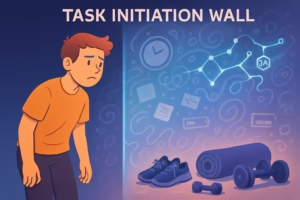
- Cognitive shutdown — Tasks you once managed feel impossible. Reading a short paragraph, sending a text, or making a simple decision can become overwhelming.
- Emotional flatness or sudden outbursts — You swing between feeling numb and completely overwhelmed. Small frustrations feel enormous and disproportionate.
- Social withdrawal — You start avoiding people, cancelling plans, and turning inward. Social contact feels like too much effort.
- Loss of basic self-care — Things like cooking, showering, or responding to messages fall away. The simplest daily habits start to slip.
- Worsening ADHD symptoms — Forgetfulness, distraction, and impulsivity become significantly worse as cognitive reserves are depleted.
- Physical symptoms — Fatigue, headaches, disrupted sleep, and sometimes physical illness as your body responds to prolonged stress.
If you recognise several of these patterns, it is worth pausing. ADHD burnout is a signal, not a character flaw — and with the right approach, recovery is possible.
Using the Dream SMART Framework to Rebuild After Burnout

One reason conventional recovery advice often fails people with ADHD burnout is that it relies on willpower, rigid routines, and outcome-focused goals — exactly the things an ADHD brain struggles with, especially when depleted.
The Dream SMART Framework, developed specifically for neurodivergent adults, takes a fundamentally different approach. Rather than asking “what should you achieve?”, it starts with “what do you deeply value — and what is the smallest possible step back towards it?”
What is Dream SMART? The Dream SMART Framework is a two-layer coaching tool designed for adults with ADHD. The first layer — DREAM — connects goal-setting to personal vision, values, and emotional fuel: Dream Visualisation (“I see myself…”), Relevant to personal values, Emotionally Connected, Actionable steps, and Momentum-based progress. The second layer — SMART — redesigns familiar goal structure for the ADHD brain, with actions that are Specific, Measurable, Achievable (at your actual energy level, not your ideal self), Realistic, and Time-bound with named days and durations. Rather than measuring whether you hit a target, Dream SMART measures direction of travel. Progress over perfection. It differs from traditional SMART goals by placing emotional connection and self-compassion at the centre — not as nice-to-haves, but as the engine of sustainable change.
For burnout recovery, the framework’s three-goal weekly structure is especially useful. Each week, you focus on just three things: one goal around Alone Time (protected rest and recovery, treated as non-negotiable maintenance), one around Friction Reduction (removing a single obstacle making life harder), and one Self-Actualisation goal — the smallest possible step back towards something that matters to you.
The Low-Barrier Entry Principle asks: “What is the smallest possible version of this action I could do today?” When burned out, three deep breaths matter more than a full mindfulness practice. Putting on your trainers matters more than making it to the gym. If you have been wondering why goal-setting keeps failing when you have ADHD, the Dream SMART approach offers a compassionate and practical answer.
The table below compares traditional SMART goals with the Dream SMART approach:
| Element | Traditional SMART | Dream SMART |
|---|---|---|
| Starting Point | Define an outcome or target | Start with your Dream Vision (“I see myself…”) |
| Motivation Driver | Discipline and willpower | Emotional connection and personal values |
| Goal Achievability | Based on ideal-self capacity | Designed for real energy — start at 20% |
| Progress Measure | Did you hit the target? | Are you moving in the right direction? |
| Response to Setbacks | Start over / try harder | Reflect, Change, Implement — one step at a time |
| Recovery Focus | Output and productivity | Rest, self-compassion, sustainable momentum |
Working with an ADHD coach through a structured programme — such as the Therapeutic Coaching Service at ADHD Coaching UK — provides the accountability and compassionate support that makes recovery feel less like a solo battle.
Frequently Asked Questions
Recovery from ADHD burnout varies depending on how long you have been running on empty, your current support system, and whether your environment changes. Recovery can take anything from a few weeks to several months. Working with an ADHD coach or therapist, adjusting your workload, and applying the Low-Barrier Entry Principle can all shorten the timeline significantly.
Yes. While both involve exhaustion, ADHD burnout is rooted in neurobiological factors including executive function overload, emotional dysregulation, and the cumulative cost of masking ADHD traits. It often affects basic functioning such as hygiene and decision-making more severely than standard burnout, and requires recovery strategies tailored to the ADHD brain.
ADHD coaching is particularly well-suited to burnout recovery because it focuses on strengths, self-compassion, and sustainable action rather than productivity output. Frameworks like Dream SMART help you set realistic goals, reduce friction, and rebuild momentum at a pace your actual energy levels can support without triggering another cycle of overextension.
The first step is recognition — acknowledging that you are burned out and that rest is not laziness but essential neurological maintenance. From there, identify one single friction point you can remove this week, protect time for genuine rest, and resist the urge to immediately bounce back to full output. One small action at a time is enough.
Yes. Without addressing the underlying drivers — masking, executive function demands, and emotional overload — ADHD burnout tends to deepen and can contribute to anxiety, depression, and physical illness. Seeking support early, whether from a GP, therapist, or ADHD coach, significantly improves outcomes.