
Task initiation — the ability to begin a task without undue delay — is one of the executive functions most commonly disrupted by ADHD. For adults with ADHD in the UK, struggling to start is not laziness, indifference, or a character flaw. It is a genuine neurological difficulty rooted in how the ADHD brain regulates dopamine and activates behaviour. Understanding why ADHD task initiation is so hard is the first step towards practical, compassionate strategies that actually work. If you have ever sat in front of an important task for an hour without being able to begin, you are in very good company.
What Is ADHD Task Initiation and Why Does It Matter?
Task initiation is a core executive function — one of a cluster of brain-based skills that help us plan, prioritise, begin, and complete purposeful actions. In adults with ADHD, this particular function is consistently impaired. According to NICE guidelines, approximately 3–4% of UK adults have ADHD. The NHS England independent ADHD Taskforce estimates that as many as 2.5 million people in England are living with the condition — many undiagnosed. Task initiation difficulties are among the most frequently reported daily challenges for this group.
“ADHD is not a disorder of knowing what to do. It is a disorder of doing what you know.”
— Dr. Russell Barkley, PhD, Clinical Professor of Psychiatry — ADHD and the Nature of Self-Control
You might recognise this experience: a report that needs writing, an email that needs sending, a phone call that needs making. You know exactly what to do. You may even want to do it. And yet something invisible keeps you frozen — scrolling, reorganising your desk, making yet another cup of tea.
This is ADHD task initiation difficulty. It is real, it is neurological, and it is not your fault.
Why the ADHD Brain Struggles to Get Started
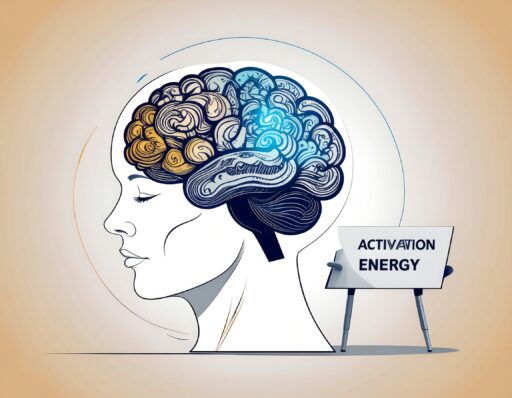
The core of the problem lies in the brain’s dopamine system. The prefrontal cortex — responsible for planning, decision-making, and initiating action — tends to be less responsive to dopamine in the ADHD brain. Dopamine signals reward, motivation, and relevance. Without a sufficient dopamine response, the brain struggles to generate the activation energy needed to begin.
Neurotypical brains can activate around tasks that are important, urgent, or obligatory. The ADHD brain typically needs something more: the task must be interesting, novel, challenging, or time-pressured. This is sometimes called the “interest-based nervous system” — a term used to describe how many ADHD brains are wired for engagement rather than importance.
This explains a familiar pattern: being completely unable to start a routine task, yet managing to hyperfocus for hours on something genuinely absorbing. It is not inconsistency. It is the brain’s dopamine system working differently.
Research published in peer-reviewed psychiatry literature confirms that executive dysfunction — including task initiation difficulties — is a core feature of ADHD across the lifespan, not simply a childhood trait that is eventually grown out of.
Task Paralysis vs. Procrastination: What’s the Difference?
Task initiation difficulty can escalate into what is called task paralysis — a state where the person genuinely cannot begin, even with the full intention to do so. This is distinct from ordinary procrastination.
Procrastination is the deliberate choice to delay a task. Task paralysis is an involuntary neurological freeze. The person is not choosing comfort over work; they are caught in a loop where the brain cannot generate the signal to start. This distinction matters enormously — both for self-compassion and for choosing the right strategies.
You can read more about this in our article on why you can’t just start: the ADHD freeze and task initiation.
During task paralysis, anxiety often amplifies the freeze. The longer the task sits undone, the more overwhelming it becomes. A painful cycle forms: pressure mounts, anxiety increases, and the brain’s ability to initiate is further suppressed. Recognising this pattern is the first step to interrupting it.
Practical Strategies for ADHD Task Initiation
The evidence points consistently to one key principle: reduce the activation energy needed to start.
- Shrink the first step to almost nothing. Instead of “write the report,” the first action is “open the document and write one sentence.” The goal is to lower the barrier to entry so far that the brain has no reason to resist. Once started, momentum often builds naturally.
- Use the five-minute commitment. Commit to working on the task for just five minutes. Set a timer. When it goes off, you can stop — but more often than not, you will carry on. Starting is the hardest part.
- Create external accountability. Telling someone you will start — or using body doubling (working alongside another person, even virtually) — can provide the external dopamine trigger the ADHD brain often needs.
- Reduce decision fatigue before you begin. The ADHD brain can get stuck deciding how to start even before it can start. Lay out your steps the night before. Use a checklist. Remove as many micro-decisions as possible so the path to beginning is clear.
- Match tasks to your energy windows. Protect peak focus time for tasks that require initiation. Lower-demand tasks can fill the edges of the day.
- Name the resistance without judgement. Sometimes the most powerful move is acknowledging: “My brain is having trouble starting right now. That is a symptom, not a character flaw.” Reducing shame reduces the anxiety that amplifies the freeze.
Our guide on why routines feel impossible with ADHD explores how environmental design and accountability structures can make a lasting difference. And for days when everything feels equally urgent, see our article on managing priorities when you have an ADHD brain.
Using the Dream SMART Framework to Overcome ADHD Task Initiation

One reason standard goal-setting advice fails people with ADHD is that it assumes motivation can be generated by importance alone. The Dream SMART Framework, developed by ADHD coach Waldo Hechter, takes a different approach — one designed for the way the ADHD brain actually works.
Dream SMART separates goal-setting into two layers: the DREAM layer (your vision, values, and emotional fuel) and the SMART layer (the specific, time-bound actions that move you forward). Traditional SMART goals focus almost entirely on the outcome. Dream SMART starts with emotional connection — because the ADHD brain runs on interest and emotion, not obligation.
At the heart of the framework is the Low-Barrier Entry Principle: “What is the smallest possible version of this action I could do today?” This maps directly onto what research tells us about ADHD task initiation: the brain needs a low activation threshold, not a heroic effort.
For someone struggling to begin a project, a Dream SMART approach might look like: connecting the task to a personal value (creativity, contribution), then defining the tiniest possible starting action (“open the file and read the first paragraph for two minutes”), designed to be achievable even on a difficult Tuesday.
The framework also uses a Three Goals structure each week — one self-care goal, one friction-reduction goal, and one goal moving towards your broader vision. This ensures that ADHD task initiation is supported by rest and environment, not willpower alone.
For a deeper look, read our article on why goal-setting keeps failing when you have ADHD — and one approach that might help.
| Dimension | Traditional SMART | Dream SMART |
|---|---|---|
| Starting point | Outcome or deadline | Vision and emotional connection |
| Motivation source | Importance / obligation | Interest, values, and emotional fuel |
| Achievability standard | Ideal-self capacity | Actual current energy level (start at 20%) |
| Measurement | Hit-or-miss targets | Direction of travel; “did I try?” |
| Time-bound framing | Deadline | Specific days and times; “now or not now” |
| Resilience to setbacks | Low — missed target = failure | High — adjust, reflect, continue |
Frequently Asked Questions
No. Task initiation difficulty in ADHD is a neurological impairment, not a character flaw. The ADHD brain genuinely struggles to generate the dopamine-driven activation signal needed to begin tasks. Adults with ADHD often want to start, understand the importance of starting, and feel distressed about not starting — the opposite of laziness.
ADHD brains run on an interest-based nervous system. Tasks that are novel, stimulating, urgent, or personally meaningful generate enough dopamine to trigger initiation. Routine, repetitive, or abstract tasks — even important ones — often do not. This inconsistency is a hallmark of ADHD, not evidence of selective effort.
The most evidence-supported first step is to make the task impossibly small. Rather than doing the task, commit to one tiny action: open the document, write one sentence, make one phone call. Removing the activation barrier is more effective than trying to generate willpower. Body doubling — working alongside someone else — is also highly effective for many adults.
Yes. ADHD coaching directly addresses executive function challenges including task initiation. A coach can help you identify your personal patterns, reduce shame around the freeze, design low-barrier action steps, and build structured accountability that supports your brain. Visit our Therapeutic Coaching Service page to learn how to get started.
For many adults, ADHD medication — particularly stimulant medications — can improve dopamine availability and reduce task initiation difficulties. NICE guidelines recommend medication as part of a comprehensive treatment plan for adults with moderate to severe ADHD symptoms. Speak to your GP about a referral for assessment, or explore the Right to Choose pathway for a faster NHS route.