ADHD procrastination is not laziness — it is a neurological barrier to starting tasks that is deeply rooted in how the ADHD brain regulates attention, motivation, and emotion. For adults with ADHD in the UK, procrastination can be one of the most misunderstood and demoralising symptoms they face. Understanding why it happens is the very first step to changing it.
What Is ADHD Procrastination — and Why Is It Different?
Many people put things off from time to time. But ADHD procrastination is different in kind, not just degree. Where neurotypical procrastination is typically about avoiding discomfort, ADHD procrastination is often a neurological freeze — the brain simply cannot generate the activation energy needed to start.
According to NICE guideline NG87, adults with ADHD frequently experience difficulties with planning, organising, and prioritising tasks — all of which are directly tied to procrastination. NICE estimates that around 3–4% of adults in the UK have ADHD, and difficulties with task initiation are among the most commonly reported day-to-day impairments.
If you have ever genuinely intended to start something, only to spend an hour paralysed in front of a blank screen — that is not a character flaw. That is your neurology at work.

The Brain Science Behind the Block
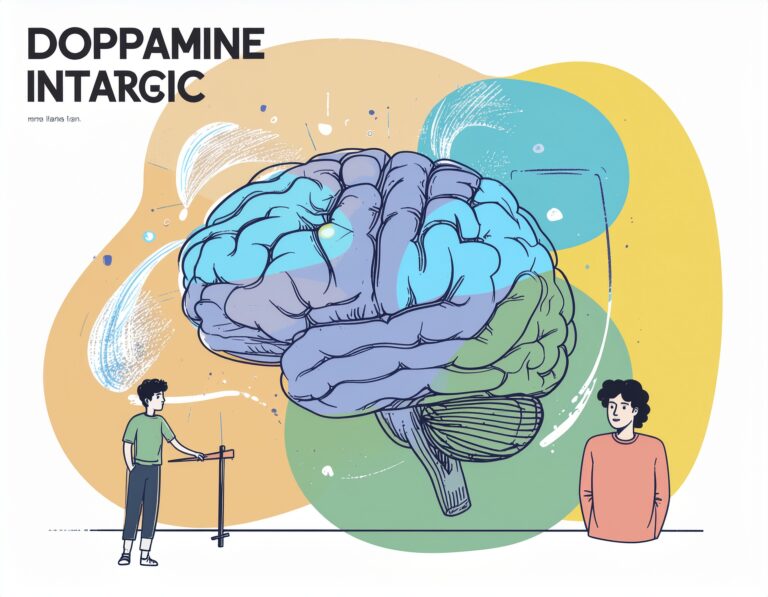
The ADHD brain has lower baseline levels of dopamine — the neurotransmitter most associated with motivation, reward anticipation, and sustained attention. When you look at a task, your brain is meant to fire an anticipatory dopamine signal that says “this is worth starting.” In ADHD, that signal is weaker — especially for tasks that are not immediately interesting, urgent, novel, or personally meaningful.
Professor Russell Barkley, one of the world’s leading ADHD researchers, describes this as an “interest-based nervous system.” The ADHD brain reliably engages when tasks are novel, challenging, urgent, or personally meaningful — but struggles to activate for routine, low-reward activities without those triggers.
“People with ADHD do not have a deficiency of knowing what to do — they have a deficiency of doing what they know. This is a problem of performance, not knowledge.”
— Dr Russell Barkley, ADHD researcher and clinical psychologist
Research suggests that up to 80% of adults with ADHD report chronic procrastination as one of their most impairing symptoms — far higher than in the general population. Time blindness — the difficulty sensing how much time is passing or how close a deadline actually is — compounds this further. When a deadline does not feel real, the brain struggles to generate the urgency it needs to act.
Practical Strategies That Actually Work for ADHD Procrastination

“Just do it” is genuinely unhelpful advice for an ADHD brain. Here are evidence-informed approaches that actually make a difference.
Make it interesting or urgent. Because the ADHD nervous system is interest-driven, artificial urgency helps. Use a timer, work in a public space, or try body doubling — sitting alongside someone else (even on a video call) while you work. The social element activates the ADHD brain in ways that a to-do list simply cannot.
Shrink the start. The barrier is rarely the task itself — it is the starting. Commit to just two minutes. Write one sentence. Open the document. Once your brain is in motion, momentum is much easier to sustain.
Externalise everything. ADHD brains struggle to hold intentions in working memory. Write tasks down, use visual timers, and put reminders in physical sight lines. What is out of sight is genuinely out of mind — a neurological reality, not laziness. Our article on ADHD and routine tasks explores why monotony triggers avoidance, and how to work around it.
Manage shame and self-blame. Many adults with ADHD carry years of being told they are lazy or unmotivated. That inner critic makes procrastination worse, not better. Working with an ADHD coach can help you build practical strategies alongside self-compassion. Read our Breaking the Loop case study to see how avoidance and perfectionism can be untangled through coaching.
Using the Dream SMART Framework to Break Through Procrastination
Goal-setting is one area where standard advice frequently fails people with ADHD. Traditional SMART goals — Specific, Measurable, Achievable, Relevant, Time-bound — are logically sound but miss something crucial for the ADHD brain: the emotional “why.”
The Dream SMART Framework, used in ADHD coaching practice at adhd-coaching.uk, addresses this directly. It adds a “Dream” layer that anchors any goal to a compelling personal vision — providing the emotional fuel the ADHD brain needs to get started and keep going.
What Is the Dream SMART Framework?
Dream SMART is a neurodiversity-affirming goal-setting approach designed to work with the interest-based ADHD nervous system, not against it. Where traditional SMART goals focus purely on measurable outcomes, Dream SMART begins with vision and values — the emotionally compelling reason a goal matters to you personally.
Research consistently shows that ADHD brains engage more reliably when tasks are personally meaningful. By connecting even tedious tasks back to a larger dream or value, Dream SMART creates the motivational bridge that “just do it” never could. The framework also builds in ADHD-friendly time awareness — recognising that time blindness is real, and planning around it rather than pretending it is not.
| Traditional SMART | Dream SMART |
|---|---|
| Specific: define the measurable outcome | Specific: define the action step AND how success feels |
| Measurable: track by numbers or milestones | Meaningful: tied to personal values and vision |
| Achievable: realistic in scope | Achievable: broken into ADHD-friendly micro-steps |
| Relevant: aligned with current goals | Resonant: emotionally compelling and interest-driven |
| Time-bound: set a fixed deadline | Time-aware: accounts for time blindness with external cues |
| (no equivalent) | Dream-led: starts with a vivid picture of the desired future |
Frequently Asked Questions
No. Laziness implies a choice not to act. ADHD procrastination is a neurological difficulty with task initiation, driven by differences in dopamine regulation and executive function. People with ADHD often desperately want to start tasks but cannot generate the activation energy to do so — a distinction that matters enormously for self-compassion and effective treatment.
ADHD affects not just motivation but also the brain’s ability to transition into tasks. Even enjoyable activities can feel hard to start if they require sustained focus or mental effort. This is sometimes called task paralysis and is a neurological response rather than a simple reluctance to begin.
Yes. A combination of ADHD coaching, behavioural strategies, and where appropriate medication (as guided by a clinician) can significantly reduce the impact of procrastination. Coaching approaches that focus on strengths, structure, and self-compassion are particularly effective for adults with ADHD.
Stimulant medications such as methylphenidate or lisdexamfetamine can improve dopamine regulation and make it easier to initiate and sustain attention on tasks. However, medication works best when combined with practical strategies and coaching. Always follow NICE guidelines and discuss options with your GP or ADHD specialist.
In addition to NHS services (though waiting times can be lengthy), ADHD coaching is available throughout the UK. Coaching focuses on practical strategies tailored to your specific patterns. Explore our coaching services at adhd-coaching.uk/services to find out more about working with an ADHD coach.