
If you have ADHD, you may have noticed a familiar pattern: you start sharing something you’re passionate about, and before you know it, fifteen minutes have passed, the other person looks glazed over, and you’re still going. Over-sharing or dominating conversations is one of the more socially challenging aspects of living with ADHD — and it can leave you feeling embarrassed, misunderstood, or worried about your relationships. The good news? Understanding why it happens is the first step to making meaningful changes.
This is not a character flaw. It’s a neurological pattern, and with the right coaching strategies, you can build more balanced, connected conversations — without losing your wonderful enthusiasm.
What Is Over-Sharing or Dominating Conversations?
Over-sharing in the context of ADHD means talking at length about a topic — often a personal interest — without fully reading the room. It can mean interrupting others, jumping from subject to subject, or filling silences with a stream of thoughts before the other person has had a chance to respond.
This is closely linked to impulsivity and a concept known as hyperfocus. When an ADHDer is excited about something, the brain floods with dopamine, making it genuinely hard to stop talking. It’s less about being self-centred and more about the ADHD brain struggling to self-regulate in real time.
For others in the conversation, this can feel overwhelming or excluding. Over time, it can affect friendships, romantic relationships, and professional connections — which is why it’s worth addressing with self-compassion and practical strategies.
The Neuroscience Behind Over-Sharing in ADHD

ADHD affects the prefrontal cortex — the part of the brain responsible for impulse control, working memory, and self-monitoring. According to NICE guideline NG87, these executive function differences influence how individuals manage and respond to conversations.
Three key brain processes are at play when over-sharing occurs:
- Impulsivity: Thoughts arrive urgently and feel like they must be expressed immediately, before the moment is lost.
- Working memory gaps: The brain struggles to hold back and process whether this is the right time or length to share something.
- Emotional dysregulation: Excitement or anxiety can amplify the urge to talk, making self-interruption feel almost impossible in the moment.
Research published in The Lancet Psychiatry has emphasised that these communication challenges are neurological in nature — not personality traits. That distinction matters. You are not rude or inconsiderate; your brain simply needs some extra tools for self-monitoring in social situations.
Understanding how emotional regulation works in ADHD can help you see why conversations can sometimes run away from you — especially when you’re passionate or anxious.
How Over-Sharing Affects Your Relationships
The impact of dominating conversations can ripple outward in ways you might not immediately see. Friends may start to withdraw, colleagues may stop seeking you out socially, and partners may begin to feel unheard. This doesn’t reflect your intentions — but it does reflect a need for awareness and skill-building.
Many adults with ADHD report a painful cycle: they over-share, notice the other person pulling back, feel the sting of rejection (often intensified by Rejection Sensitive Dysphoria), and then either withdraw or talk more to compensate. Understanding how ADHD affects emotional regulation at work and in life can shed light on why this cycle feels so difficult to break.
The important thing to know is that you are not doomed to repeat this pattern. Awareness, paired with compassionate coaching, can genuinely shift things.
Coaching Strategies to Help With Over-Sharing in ADHD
The following strategies are practical, evidence-informed, and designed to be used gently — not as a way of suppressing yourself, but as a way of deepening your connections.
1. Learn to Pause and Check In
One of the most powerful habits you can build is the ‘pause and check in’. After a couple of minutes of talking, take a breath and ask the other person a question. This does two things: it signals that you value their input, and it gives your working memory a moment to recalibrate.
A simple prompt to use internally: “Have I asked them anything yet?” It sounds straightforward, but even asking yourself this once during a conversation can make a real difference.
2. Practice Active Listening
Active listening is a skill, and like any skill, it can be practised. Try repeating back or summarising what someone has said before you respond — for example: “So it sounds like you’re feeling…” or “That’s interesting — are you saying…?” This slows the conversation naturally and shows genuine interest.
You might also try being more intentional about non-verbal cues. Making appropriate eye contact and noticing body language shifts (such as the other person leaning back or glancing away) can give you real-time feedback that the conversation needs rebalancing.
3. Use External Reminders
If you know you’re going into a conversation where you tend to over-share — a work meeting, a first date, a family gathering — prepare a small cue. Some people find it helpful to write a note on their hand or phone: “Listen more.” Others set a gentle vibrating alarm on their watch to remind them to pause and check in.
External reminders work well for the ADHD brain because they bypass working memory. Rather than relying on remembering to self-monitor, you create an external trigger that does the job for you.
4. Disclose When It Feels Right
If you’re in a close relationship or a trusted social environment, sharing that you have ADHD and sometimes struggle with conversation balance can be incredibly freeing. Most people respond with empathy and appreciate the honesty. A simple, matter-of-fact disclosure — “I sometimes get really carried away when I’m excited about something — please feel free to jump in” — can actually strengthen the relationship.
5. Work With a Coach
Coaching offers a structured, non-judgmental space to practise social self-awareness. A coach who understands ADHD can help you identify your personal patterns, build bespoke strategies, and role-play real-life scenarios so that new habits feel natural rather than forced.
At ADHD-Coaching.uk, the Dream SMART Programme offers a structured 12-week framework that includes building self-awareness in social contexts — one of the areas where many ADHD adults see the most meaningful gains.
Building Conversation Confidence: A Note on Self-Compassion
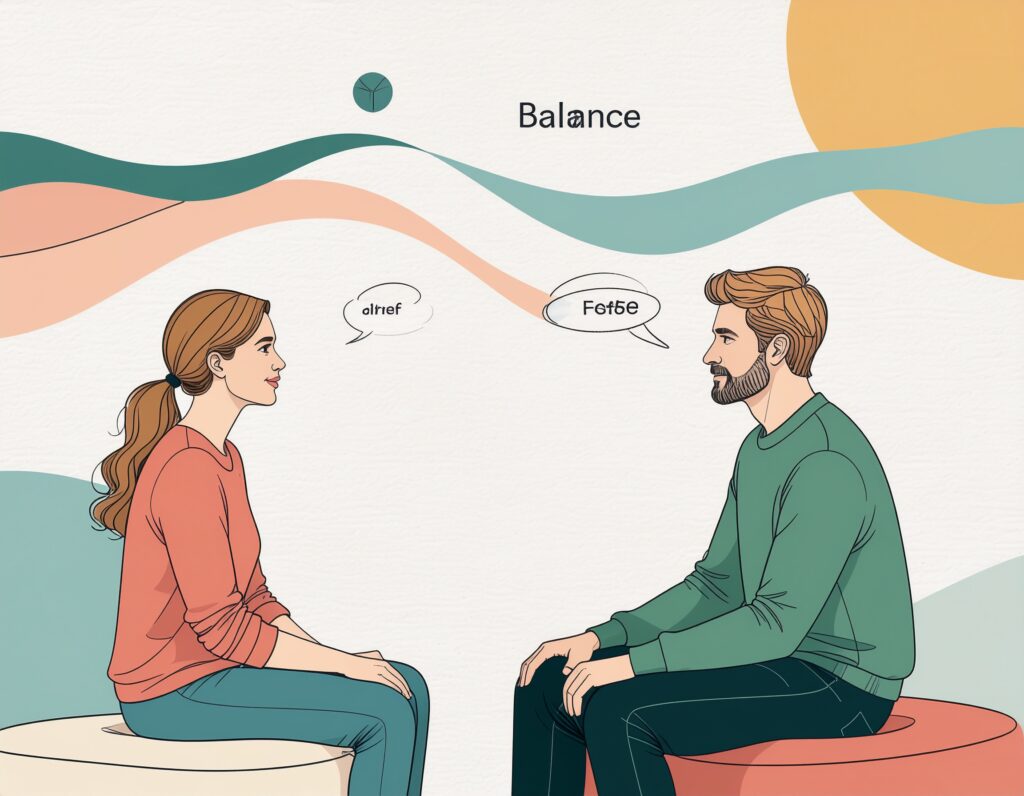
It is worth saying clearly: being passionate, enthusiastic, and full of ideas is a strength. The goal is never to dim that. The goal is to share it in ways that bring people closer rather than pushing them away.
When you do over-share — and you will sometimes — try to resist the urge to spiral into self-criticism. A gentle internal check-in (“I talked a lot there — I’ll make sure to listen now”) is far more useful than self-blame.
Understanding how ADHD affects urgency and priorities can also help you understand why some thoughts feel so urgent in the moment — and how to gently redirect that urgency into more balanced interactions.
If you’d like to explore a free ADHD self-assessment, it can be a helpful first step toward understanding your unique profile and how it shows up in social situations.
Key Takeaways
- Over-sharing and dominating conversations in ADHD is neurological — driven by impulsivity, hyperfocus, and working memory differences.
- It can affect relationships but is absolutely manageable with the right strategies and support.
- Practical tools like the ‘pause and check in’, active listening, and external reminders can make a real difference.
- Self-compassion is not optional — it is part of the strategy.
- ADHD coaching can offer structured support to build lasting social skills and self-awareness.