When you have ADHD, everything can feel urgent. Emails, messages, half-finished tasks, ideas, worries, and reminders all compete for attention at the same time. This is not a motivation problem or a lack of discipline. It is a difference in how the ADHD brain processes time, threat, and importance.
Many adults with ADHD describe living in a constant state of “now or never”. Tasks that are genuinely important can feel no more compelling than things that are simply loud, new, or emotionally charged. This article explores why urgency hijacks priorities in ADHD, how anxiety and time-blindness amplify the problem, and what practical strategies can help you separate what matters from what merely shouts the loudest.
Why everything feels urgent with ADHD
ADHD affects executive functions: the brain skills that help with planning, prioritising, organising, and regulating attention and emotion. Research shows that people with ADHD often struggle with time perception, working memory, and emotional regulation, all of which influence how urgency is experienced.
Key factors include:
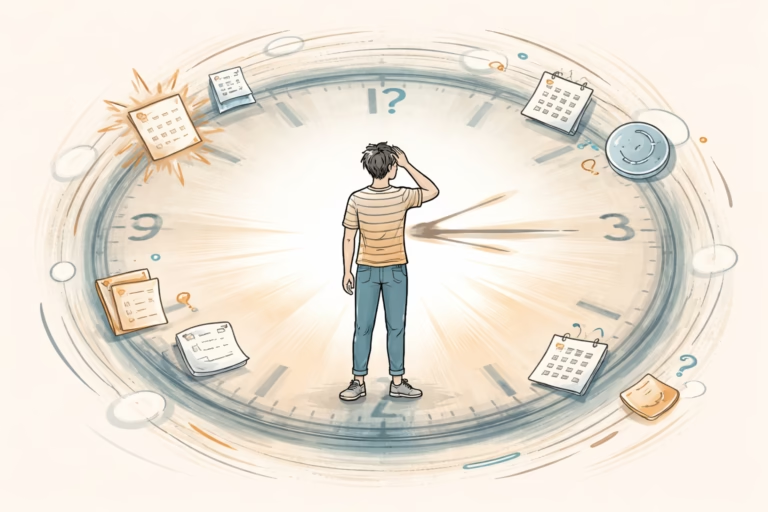
Time-blindness
Many people with ADHD experience time as “now” and “not now”, rather than a smooth timeline. Future consequences feel abstract, while immediate demands feel intense and unavoidable. This makes last-minute pressure the default driver of action.
Emotion-driven prioritisation
The ADHD brain is more sensitive to emotional cues. Tasks linked to anxiety, fear of letting someone down, or excitement tend to jump the queue, regardless of their actual importance.
Threat and stress response
When overwhelmed, the nervous system can switch into threat mode. The brain scans for danger, not importance. Emails, notifications, or unfinished tasks are interpreted as risks that must be dealt with immediately.
Working memory overload
Holding multiple priorities in mind at once is hard with ADHD. When everything feels like it must be remembered, the brain treats all tasks as equally urgent.
These patterns are well recognised in clinical guidance and ADHD research, including work referenced by NHS and NICE in their ADHD overviews and treatment guidance.
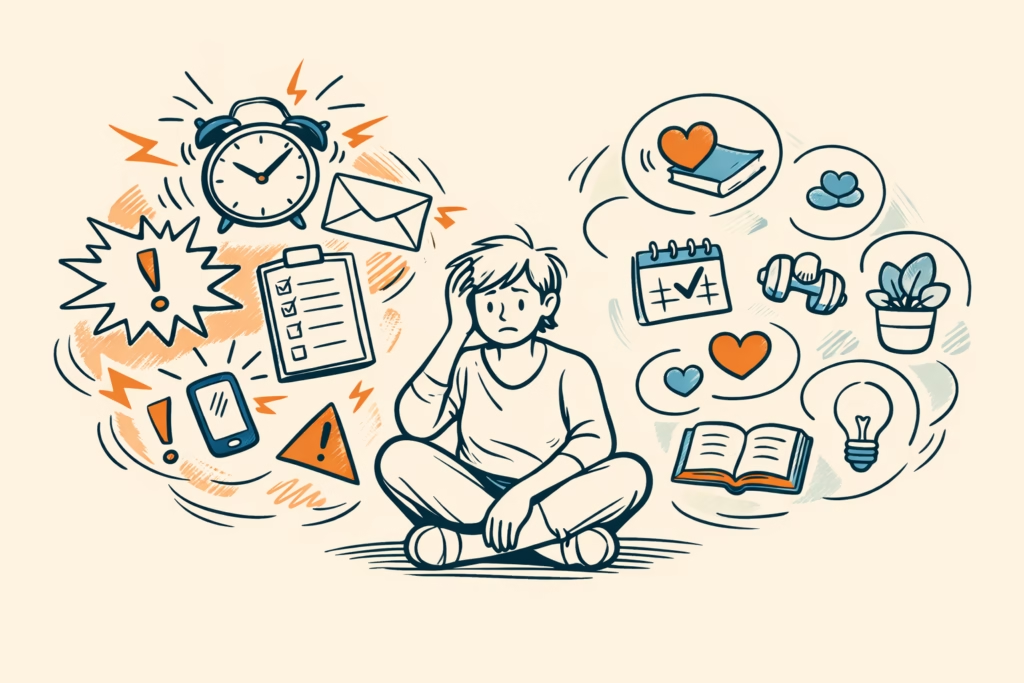
Important vs. loud: learning the difference
A helpful reframe for ADHD is to stop asking “What is most urgent?” and instead ask “What is important but quiet?”
Important tasks usually:
- Link to long-term goals or values
- Reduce future stress
- Support health, work stability, or relationships
- Rarely shout for attention on their own
Loud tasks often:
- Trigger anxiety or guilt
- Come with notifications, reminders, or other people’s expectations
- Feel emotionally uncomfortable to ignore
- Create a false sense of relief when completed
For ADHD brains, loud tasks feel urgent even when they are low impact. Important tasks often feel invisible until they become emergencies.
How anxiety makes planning feel impossible
Anxiety and ADHD frequently overlap. When anxiety is present, the brain’s priority system becomes even more distorted.
Planning requires:
- Holding future steps in mind
- Tolerating uncertainty
- Trusting that you will act later
An anxious ADHD brain struggles with all three. The result is avoidance, over-planning without action, or reactive task-switching. This is why traditional productivity advice often fails—it assumes a calm nervous system and reliable time awareness.
Research summarised by organisations such as ADHD Foundation highlights the importance of reducing emotional load before expecting better organisation or planning.
Practical strategies to manage urgency with ADHD
These approaches are commonly used in ADHD coaching and are supported by executive function research.
1. Externalise importance
Do not rely on your brain to hold priorities. Write them down in one visible place. Limit the list to three “important” items per day to reduce overload.
2. Name the urgency
When something feels urgent, pause and label it:
“Is this urgent because it matters, or because it feels uncomfortable?”
This brief pause can reduce emotional reactivity.
3. Use time containers, not to-do lists
Instead of endless lists, assign tasks to short, realistic time blocks. This helps counter time-blindness and reduces the sense that everything must be done at once.
4. Create artificial quiet alarms for important tasks
Important tasks need reminders because they are quiet. Calendar alerts, visual cues, or accountability check-ins make importance louder in a controlled way.
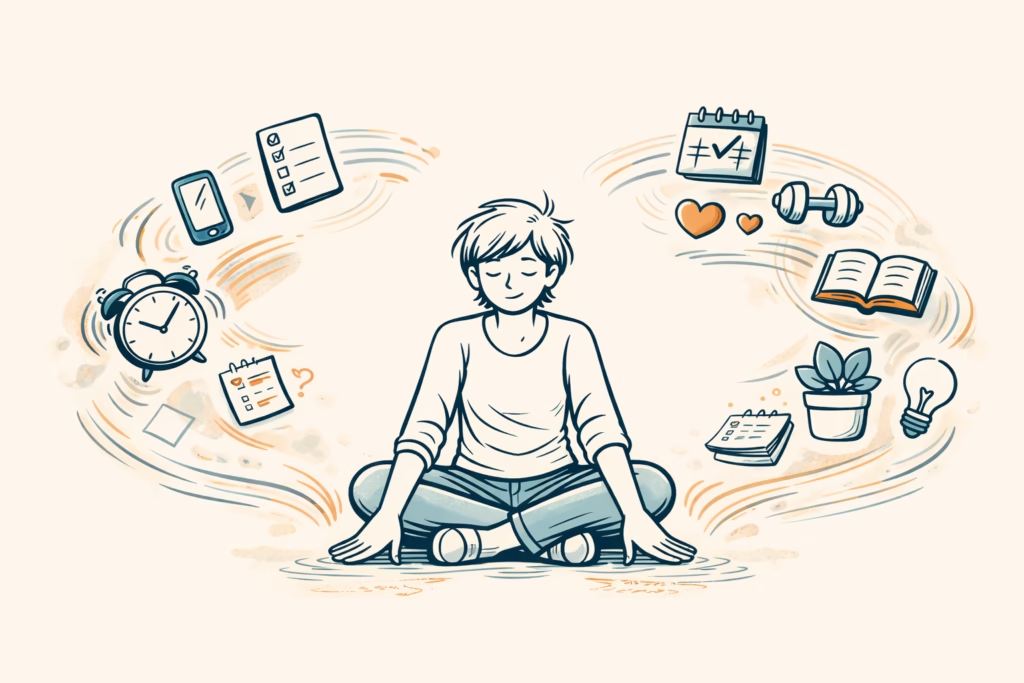
5. Regulate first, plan second
If your body is tense or anxious, planning will fail. Use grounding, movement, or breathing before deciding what to work on.
When to seek additional support
If everything feeling urgent is leading to burnout, chronic anxiety, or shutdown, support can make a significant difference. ADHD-informed coaching helps clients build systems that work with their brain rather than against it, while clinical support may be appropriate when anxiety or stress is severe.
Key takeaway
For an ADHD brain, urgency is often emotional, not logical. Learning to spot what is loud versus what is important is a skill, not a personality trait. With the right tools and support, priorities can become clearer, planning less overwhelming, and urgency less exhausting.