ADHD impulsive comments are one of the most common ways the condition affects relationships — but they don’t have to cause lasting damage. Understanding the neuroscience behind impulsivity, and applying practical coaching strategies, can help you communicate with more care and confidence. Discover evidence-based tools and the Dream SMART Framework to protect your most important relationships.
Have you ever said something and immediately wished you could take it back? If you have ADHD, you probably know this feeling very well. ADHD impulsive comments are one of the most common — and most painful — ways the condition affects relationships. Whether it’s a blunt remark, an interruption at the wrong moment, or a snap decision you later regret, impulsivity in conversation can leave lasting damage.
The good news is that understanding why this happens is the first step to changing it. And with the right strategies, it is absolutely possible to protect your relationships without suppressing who you are.
Why Does ADHD Cause Impulsive Comments?
The brain plays a central role in impulsivity. Research shows that ADHD is associated with differences in the prefrontal cortex — the part of the brain responsible for decision-making, impulse control, and weighing consequences. When this region functions differently, the usual “brake” that slows down our speech and actions does not always engage in time.
A 2024 study published in Scientific Reports found that people with ADHD consistently showed suboptimal decision-making patterns in social situations, and that this was linked to interpersonal problems over time. This is not about being careless or unkind. It is about neurology.
Lower levels of dopamine — a neurotransmitter involved in reward and motivation — also contribute. When dopamine is low, the brain struggles to slow down and evaluate consequences before acting. A thought pops into your head and, before your filtering system catches up, it is already out of your mouth.
It is worth saying clearly: having ADHD does not make you a bad person. It makes some things genuinely harder. That is not an excuse — it is context.
How ADHD Impulsive Comments Affect Relationships
The impact on relationships can be significant. A comment made without thinking — even one meant with no harm — can land badly. Partners, friends, and colleagues may feel dismissed, disrespected, or hurt. Over time, repeated moments like these can erode trust and create emotional distance.
It is also common to feel deep shame after the fact. Many people with ADHD describe a cycle: blurting something out, immediately recognising it was wrong, then spiralling into guilt. That cycle is exhausting. It can make you feel like a fundamentally flawed communicator — even when you are genuinely trying.
Impulsive decisions cause similar problems: agreeing to something you cannot follow through on, making a financial choice without consulting a partner, or sending a message in anger. For more on how interrupting connects to these dynamics, have a look at Interrupting or Talking Over Others: Why It Happens and How to Manage It in ADHD Relationships on this site.
Understanding that your impulsivity also shows up in other areas — like impulsive eating or agreeing to too many commitments — can help you see the broader pattern and respond with greater self-compassion.
Practical Strategies for Managing ADHD Impulsive Comments
The following strategies are grounded in evidence and ADHD coaching practice. They will not eliminate impulsivity overnight, but they will help you build better habits over time.
Pause Before You Speak
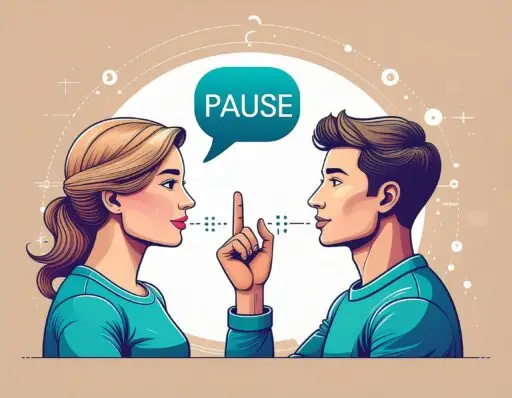
This sounds simple, but it is genuinely effective. Even a two-second gap between having a thought and speaking it gives your prefrontal cortex a chance to catch up. Try a physical anchor — pressing your feet into the floor, taking a slow breath, or squeezing your hand — to create that brief pause.
If you are in a heated conversation, it is perfectly fine to say, “I need a moment to think.” Most people will respect that far more than an impulsive comment they would rather not have heard.
Write It Down First
If you have something important to communicate — feedback to a colleague, a concern with your partner, a difficult question — try writing it down before saying it. This gives you the chance to review it, reframe it if needed, and decide whether it still needs to be said at all.
This technique works especially well for messages, emails, and texts. Pause before hitting send. Impulsivity thrives in real time; writing gives you a buffer.
Use Repair Phrases
Even with the best strategies, impulsive comments will still happen sometimes. Having a set of go-to repair phrases can make a big difference. Something like, “I am sorry — that came out wrong. What I meant was…” or “I spoke too fast. Can I try again?” shows the other person that you are aware of your impact and care about getting it right.
Repair is not weakness. It is one of the most important relational skills anyone can have.
Identify Your Triggers
Impulsive comments tend to spike during certain conditions — when you are stressed, overwhelmed, hungry, or sleep-deprived. Noticing your patterns helps you anticipate when you are most at risk.
You might find it useful to track these moments in a journal or notes app. Over time, you will start to see the situations where you need to be most intentional. You can also explore how ADHD affects routine and self-regulation in ADHD & Routine Tasks: Why Monotony Feels Hard.
Using the Dream SMART Framework to Build Better Communication Habits

One of the most effective ways to create lasting change is to connect your goal to something that truly matters to you. That is where the Dream SMART Framework comes in.
Developed by ADHD coach Waldo Hechter, the Dream SMART Framework starts not with a task list but with your dream — the life you want to be living, the relationships you want to have, the person you want to be. From that vision, you build SMART goals: Specific, Measurable, Achievable, Relevant, and Time-bound.
Here is how this might look for someone working on impulsive comments in relationships:
Dream: “I want to feel close and trusted in my relationships. I want my partner to know I value them.”
Specific goal: “I will pause for three seconds before responding in conversations where I feel reactive.”
Measurable: I will track how many times I use the pause technique each week.
Achievable: Three seconds is realistic — it is not asking for perfect impulse control, just a brief delay.
Relevant: It connects directly to the dream of being a more present, thoughtful partner.
Time-bound: I will commit to practising this for four weeks and then review.
This approach works because it links behaviour change to meaning, not just willpower. Willpower is unreliable. Purpose is more durable.
If you are interested in seeing how this kind of coaching plays out in real life, read Breaking the Loop: Navigating ADHD Challenges with Coaching Support for an honest case study.
When to Seek Extra Support
If impulsivity is significantly affecting your relationships despite your best efforts, it is worth speaking to a professional. NICE guidelines (NG87) recommend that adults with ADHD whose symptoms cause significant impairment should be offered both psychological support and, where appropriate, medication. Both can make a real difference to impulse control and emotional regulation.
ADHD coaching can also be incredibly valuable. A coach works with you to identify patterns, set meaningful goals, and build sustainable strategies — without judgement. You will not be expected to be perfect from day one. The aim is progress, not perfection.
You can explore what coaching support looks like at adhd-coaching.uk.
Impulsive comments do not have to define your relationships. With understanding, the right tools, and a healthy dose of self-compassion, you can build the connections you genuinely want. You do not have to be perfect — you just have to keep trying.
Home | Articles | Relationships | ADHD and Impulsive Comments: How to Protect Your Relationships
ADHD and Impulsive Comments: How to Protect Your Relationships
Table of Contents
Have you ever said something and immediately wished you could take it back? If you have ADHD, you probably know this feeling very well. ADHD impulsive comments are one of the most common — and most painful — ways the condition affects relationships. Whether it’s a blunt remark, an interruption at the wrong moment, or a snap decision you later regret, impulsivity in conversation can leave lasting damage.
The good news is that understanding why this happens is the first step to changing it. And with the right strategies, it is absolutely possible to protect your relationships without suppressing who you are.
Why Does ADHD Cause Impulsive Comments?
The brain plays a central role in impulsivity. Research shows that ADHD is associated with differences in the prefrontal cortex — the part of the brain responsible for decision-making, impulse control, and weighing consequences. When this region functions differently, the usual “brake” that slows down our speech and actions does not always engage in time.
A 2024 study published in Scientific Reports found that people with ADHD consistently showed suboptimal decision-making patterns in social situations, and that this was linked to interpersonal problems over time. This is not about being careless or unkind. It is about neurology.
Lower levels of dopamine — a neurotransmitter involved in reward and motivation — also contribute. When dopamine is low, the brain struggles to slow down and evaluate consequences before acting. A thought pops into your head and, before your filtering system catches up, it is already out of your mouth.
It is worth saying clearly: having ADHD does not make you a bad person. It makes some things genuinely harder. That is not an excuse — it is context.
How ADHD Impulsive Comments Affect Relationships
The impact on relationships can be significant. A comment made without thinking — even one meant with no harm — can land badly. Partners, friends, and colleagues may feel dismissed, disrespected, or hurt. Over time, repeated moments like these can erode trust and create emotional distance.
It is also common to feel deep shame after the fact. Many people with ADHD describe a cycle: blurting something out, immediately recognising it was wrong, then spiralling into guilt. That cycle is exhausting. It can make you feel like a fundamentally flawed communicator — even when you are genuinely trying.
Impulsive decisions cause similar problems: agreeing to something you cannot follow through on, making a financial choice without consulting a partner, or sending a message in anger. For more on how interrupting connects to these dynamics, have a look at Interrupting or Talking Over Others: Why It Happens and How to Manage It in ADHD Relationships on this site.
Understanding that your impulsivity also shows up in other areas — like impulsive eating or agreeing to too many commitments — can help you see the broader pattern and respond with greater self-compassion.
Practical Strategies for Managing ADHD Impulsive Comments
The following strategies are grounded in evidence and ADHD coaching practice. They will not eliminate impulsivity overnight, but they will help you build better habits over time.
Pause Before You Speak
This sounds simple, but it is genuinely effective. Even a two-second gap between having a thought and speaking it gives your prefrontal cortex a chance to catch up. Try a physical anchor — pressing your feet into the floor, taking a slow breath, or squeezing your hand — to create that brief pause.
If you are in a heated conversation, it is perfectly fine to say, “I need a moment to think.” Most people will respect that far more than an impulsive comment they would rather not have heard.
Write It Down First
If you have something important to communicate — feedback to a colleague, a concern with your partner, a difficult question — try writing it down before saying it. This gives you the chance to review it, reframe it if needed, and decide whether it still needs to be said at all.
This technique works especially well for messages, emails, and texts. Pause before hitting send. Impulsivity thrives in real time; writing gives you a buffer.
Use Repair Phrases
Even with the best strategies, impulsive comments will still happen sometimes. Having a set of go-to repair phrases can make a big difference. Something like, “I am sorry — that came out wrong. What I meant was…” or “I spoke too fast. Can I try again?” shows the other person that you are aware of your impact and care about getting it right.
Repair is not weakness. It is one of the most important relational skills anyone can have.
Identify Your Triggers
Impulsive comments tend to spike during certain conditions — when you are stressed, overwhelmed, hungry, or sleep-deprived. Noticing your patterns helps you anticipate when you are most at risk.
You might find it useful to track these moments in a journal or notes app. Over time, you will start to see the situations where you need to be most intentional. You can also explore how ADHD affects routine and self-regulation in ADHD & Routine Tasks: Why Monotony Feels Hard.
Using the Dream SMART Framework to Build Better Communication Habits
One of the most effective ways to create lasting change is to connect your goal to something that truly matters to you. That is where the Dream SMART Framework comes in.
Developed by ADHD coach Waldo Hechter, the Dream SMART Framework starts not with a task list but with your dream — the life you want to be living, the relationships you want to have, the person you want to be. From that vision, you build SMART goals: Specific, Measurable, Achievable, Relevant, and Time-bound.
Here is how this might look for someone working on impulsive comments in relationships:
Dream: “I want to feel close and trusted in my relationships. I want my partner to know I value them.”
Specific goal: “I will pause for three seconds before responding in conversations where I feel reactive.”
Measurable: I will track how many times I use the pause technique each week.
Achievable: Three seconds is realistic — it is not asking for perfect impulse control, just a brief delay.
Relevant: It connects directly to the dream of being a more present, thoughtful partner.
Time-bound: I will commit to practising this for four weeks and then review.
This approach works because it links behaviour change to meaning, not just willpower. Willpower is unreliable. Purpose is more durable.
If you are interested in seeing how this kind of coaching plays out in real life, read Breaking the Loop: Navigating ADHD Challenges with Coaching Support for an honest case study.
When to Seek Extra Support
If impulsivity is significantly affecting your relationships despite your best efforts, it is worth speaking to a professional. NICE guidelines (NG87) recommend that adults with ADHD whose symptoms cause significant impairment should be offered both psychological support and, where appropriate, medication. Both can make a real difference to impulse control and emotional regulation.
ADHD coaching can also be incredibly valuable. A coach works with you to identify patterns, set meaningful goals, and build sustainable strategies — without judgement. You will not be expected to be perfect from day one. The aim is progress, not perfection.
You can explore what coaching support looks like at adhd-coaching.uk.
Impulsive comments do not have to define your relationships. With understanding, the right tools, and a healthy dose of self-compassion, you can build the connections you genuinely want. You do not have to be perfect — you just have to keep trying.
Categories
Tags
Research References
More Fantastically Related Articles
ADHD and Loneliness: Why Adults Feel Disconnected and How to Reconnect
Read MoreHow to Navigate Romantic Relationships When You Have ADHD (UK Guide)
Read MoreDifficulty Maintaining Emotional Regulation in Relationships
Read More