Self-awareness is the quiet engine behind personal growth. It shapes how we solve problems, regulate our emotions, make decisions and understand our patterns. Yet many people, especially those with ADHD or executive function challenges, aren’t taught how to reflect on their own thinking. They know what happened, but not why.
This is where coaching becomes a powerful tool. Through guided reflection, practical strategies and gentle curiosity, people learn to pause long enough to observe the processes happening inside:
- How do I respond to stress?
- What triggers overwhelm?
- Why do I stop when things get hard?
- What helps me feel confident and capable?
This reflective ability is known as metacognition, and research consistently links it to improved learning, emotional understanding and long-term wellbeing.
If you live with ADHD, metacognition sits alongside other executive functions like time management, task initiation and emotional regulation. You can explore more about these in the Executive Function articles.
What Metacognition Really Means
Metacognition is the ability to notice and understand your thinking. It includes:
1. Metacognitive knowledge
Understanding your strengths, limitations and typical patterns.
People might realise:
- “I need visual reminders.”
- “When I rush, I miss details.”
- “I need breaks before my focus drops.”
For many ADHDers this awareness develops later, often after years of being told they are “lazy”, “disorganised” or “too emotional”. Articles like Time Blindness Explained and Fighting Distraction unpack how these executive function differences actually work in day-to-day life.
2. Metacognitive regulation
The ability to adjust your approach: planning, monitoring and reviewing.
Examples include:
- Choosing a different strategy when something isn’t working
- Asking for help sooner
- Recognising when emotions are driving decisions
For neurodivergent adults, especially those with ADHD, these skills are often under-developed—not because of laziness or lack of interest, but because working memory, attention and emotional regulation are already working hard in the background. Research shows that people with ADHD often need more explicit support to build metacognitive skills and transfer them into real-life situations.
Why Coaching Builds Better Self-Awareness

1. Coaching creates space for reflection
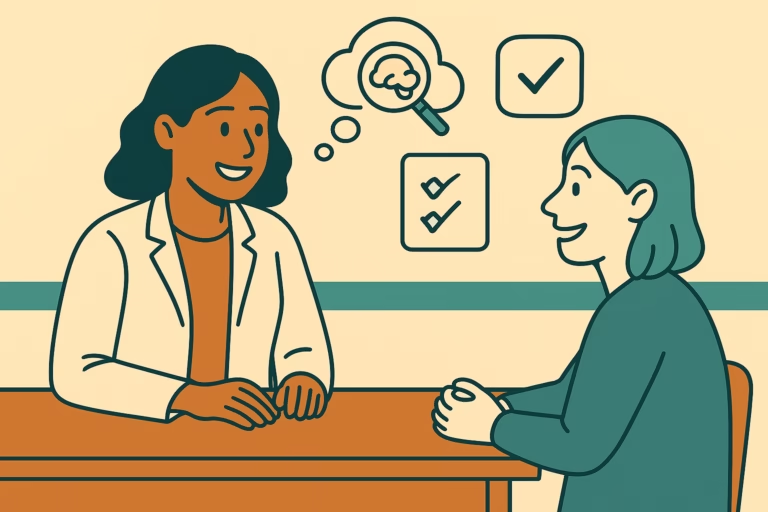
Most people never take time to examine how they think. Coaching sessions slow the process down, offering guided questions such as:
- “What was happening just before things felt difficult?”
- “What helped you get started?”
- “How did your feelings influence your choices?”
In my practice, I often use the SAFE Framework to structure this reflection—helping people look at Executive Functions, Awareness, SMART Goals, in their lives.
Over time, this strengthens metacognitive awareness in a safe, structured way.
2. Coaching supports emotional insight
Understanding emotions is a key part of thinking about thinking. Many adults with ADHD struggle to make sense of emotional shifts—intensity, rejection sensitivity, sudden overwhelm.
Coaching helps people name these experiences, recognise patterns and learn to respond rather than react. Emotional regulation is such a central challenge in ADHD that it is now seen as one of the biggest predictors of wellbeing and self-esteem.
If irritability or emotional overload is a big part of your story, you might also find it helpful to read Why Do I Get So Irritated? Understanding Low Frustration Tolerance, which explores this in more detail.
3. Coaching builds self-management skills
Once someone understands their inner processes, they can:
- Anticipate challenges
- Plan more realistically
- Pause before spiralling
- Use strategies that actually match their needs
This reduces burnout, boosts confidence and supports more consistent progress. Programmes like your 12-week coaching journey (described on the Getting Started and Therapeutic Coaching Service page) are designed to give people time to experiment, reflect and refine their strategies between sessions.
4. Coaching reduces shame and builds compassion
Self-awareness without judgement is one of coaching’s core gifts.
When people realise:
- “This isn’t a flaw—this is how my brain works,”
self-respect increases and shame decreases. Coaches often blend metacognitive reflection with gentle accountability, helping clients notice progress, not just “failures”. Emerging research suggests that metacognitive and awareness-based interventions can improve emotional regulation and reduce problem behaviours in people with ADHD.
With shame lowered, behaviour change becomes possible.
Simple Metacognitive Practices You Can Start Today

You do not need a full programme to begin; you can start with small reflective habits. Many of these fit neatly alongside tools in the Executive Functions & Core ADHD Skills service area.
1. The pause check
Before reacting, ask yourself:
- What am I thinking?
- What am I feeling?
- What do I need?
Even a five-second pause creates a gap between trigger and reaction.
2. Daily micro-reflections
End your day with three questions:
- What went well?
- What was harder than expected?
- What helped me cope or move forward?
You can link these reflections back to your coaching goals or frameworks like SAFE.
3. Strategy mapping
When something works—getting out of bed on time, completing a task, having a calmer conversation—capture how you did it. Write down the steps and turn them into a mini routine. Tools like checklists, timers and environmental cues (which you’ll see used in articles like Fighting Distraction) can then be reused across different parts of life.
4. Emotional temperature checks
Rate your emotional intensity (0–10).
Anything above 6 is a cue to pause, breathe, step away briefly or use a strategy your coach has helped you develop.
5. Pattern spotting
When a challenge repeats—always late, always stuck starting, always drained after certain meetings—treat it as data, not failure.
Ask:
- What do these situations have in common?
- What is my brain trying to protect me from?
You might choose to explore this further in individual or group coaching if community support would help.
How This Supports People With ADHD
Research from psychology and education shows that metacognition and self-regulation strongly support learning and long-term progress across ages.
Specific studies with ADHD learners have found that metacognitive interventions can:
- improve attention and problem-solving
- increase motivation and confidence
- reduce behavioural and emotional difficulties
Coaching becomes not just a support tool, but a structured space where someone finally gets to understand themselves clearly—how they think, feel and cope—and then build systems that match their real brain, not the one they “wish” they had. Articles across your site (for example those under Executive Function) are already helping readers make these links between insight and everyday life.
Final Thoughts
Thinking about your thinking is a skill that can transform how you work, feel and cope. Coaching offers the scaffolding, the questions and the perspective needed to develop it. With greater self-awareness, people gain more control over their choices, more clarity in their emotions and more compassion for themselves.
If you would like to explore this in a structured way, you can request a Free Consultation to see whether therapeutic coaching might be a good fit for you.
Metacognition doesn’t just change outcomes—it changes the relationship you have with yourself.
Internal Links
- https://adhd-coaching.uk/category/articles/executive-function/;
- https://adhd-coaching.uk/safe-framework/;
- https://adhd-coaching.uk/articles/executive-function/fighting-distraction-adhd-focus/;
- https://adhd-coaching.uk/articles/executive-function/time-blindness-adhd/;
- https://adhd-coaching.uk/articles/emotional-regulation/low-frustration-tolerance/;
- https://adhd-coaching.uk/services/group-coaching-community/;
- https://adhd-coaching.uk/free-consultation/
External Links
- https://educationendowmentfoundation.org.uk/education-evidence/guidance-reports/metacognition;
- https://www.psychologytoday.com/gb/blog/on-your-way-with-adhd/202308/adhd-and-metacognition;
- https://brieflands.com/journals/jjcdc/articles/123921;
- https://www.frontiersin.org/articles/10.3389/fpsyg.2021.747961/full;
- https://www.shimmer.care/blog/adhd-emotional-regulation