Article
If you’re anything like me, doing DIY is one of life’s strangely satisfying adventures: measuring, cutting, building, renovating, giving something a new life or making something from scratch that suits you. But alongside the delight runs a current of frustration—because for anyone with ADHD many small mishaps become costly.
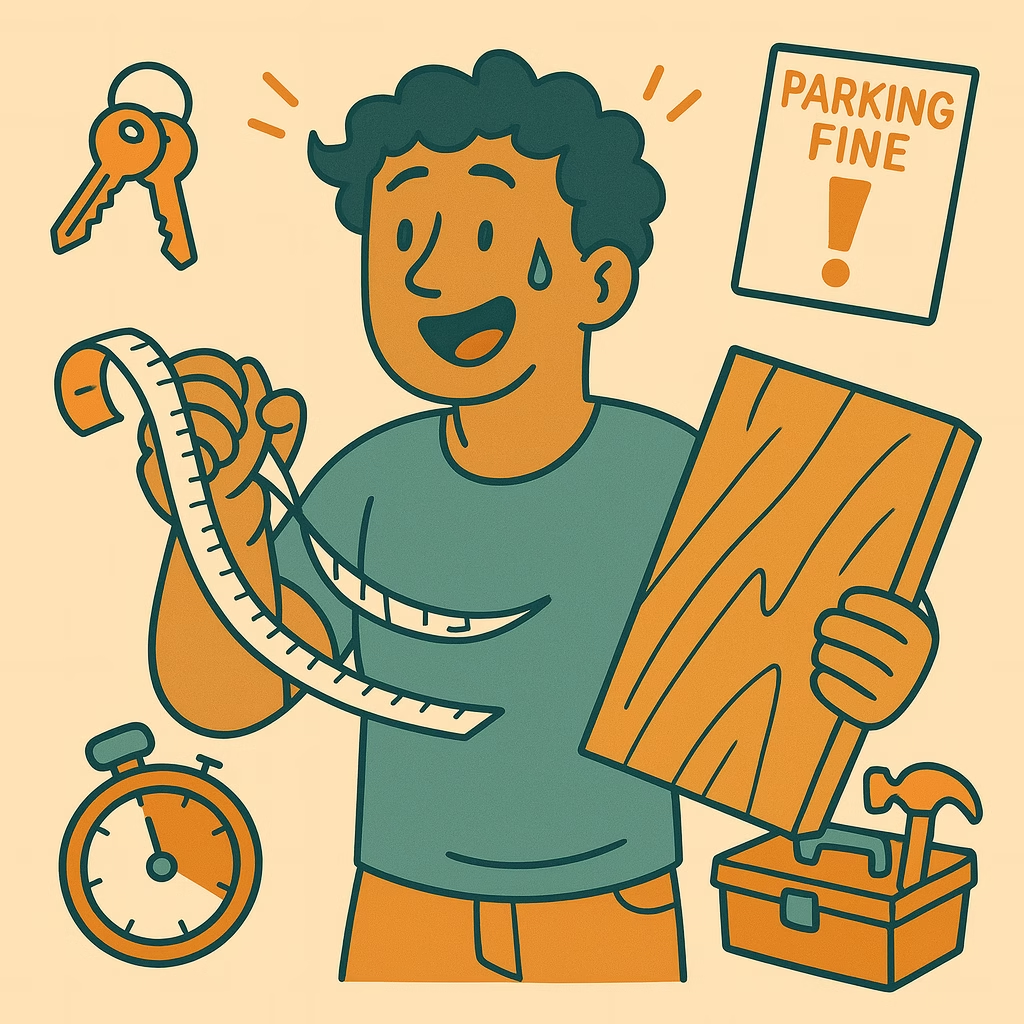
I’ll admit: I lose my keys, find them in my pocket three days later. I mis-measure that one board, buy too few screws, and suddenly the project is delayed. I forget to pay for parking because I’m rushing into the hardware store—for 10 minutes—which then sparks a fine. Call it the “ADHD Tax”.
By “ADHD Tax” I mean all those little extra bits of cost that arise because of ADHD symptoms: impulsivity, inattention, forgetfulness, mis-planning. For DIY folks the tax might mean: buying extra materials, paying late fees, re-doing parts because they went wrong, hiring help when things collapse, or simply losing time which could cost money.

What the research says
It turns out I’m not alone, and the burden is real.
- A UK-based survey by Monzo Bank found that adults with ADHD reported extra costs averaging £1,600 per year due to money-management difficulties such as impulse spending and missed bill payments. Monzo
- A sibling-comparison study (Denmark & siblings) found that an adult with ADHD incurred around €20,000 per year extra when combining private and public costs compared with a non-ADHD sibling. adhdevidence.org
- In the UK, the ADHD Taskforce estimated that untreated ADHD places avoidable costs of at least £17 billion on individuals and society. NHS England
- One study from University of Nottingham found that each adult with ADHD had over £18,000 more costs per year than their sibling without ADHD. University of Nottingham
In short: ADHD can lead directly to financial costs — fewer paid hours worked, more benefit claims, more mistakes, more re-work, more fines. These data validate the real-world idea of an “ADHD Tax”.
How this plays out in DIY
Relating this back to that DIY project:
- You buy materials, cut one board wrong by a few centimetres. That mis-cut costs a new board or filler, maybe a trip to the shop and more cost.
- You lose track of time because you’ve gone off task, so you have to get a taxi home with materials rather than using your van—£30 extra.
- You forget to order a part, project is delayed, so you book the tradesman at higher cost.
- You get impulsive and buy “that extra tool” by telling yourself you’ll use it for future projects—but you don’t, and it turns into shelf-clutter (material cost + mental cost).
- You forgot to book parking at the recycle centre, get a fine.
All of those could be seen as part of an ADHD Tax in DIY.
So: Do you factor in the ADHD Tax in your budget or just wing it?
Here are two approaches:
1. Budget for ADHD Tax.
- Add a “buffer line” in your project budget: maybe +10-20 % of materials cost, +£100-£200 contingency for mistakes or time overruns.
- Write down known risk-areas (measurement errors, getting distracted, forgetting parts) and build in time blocks to review and check.
- Use reminders, timers, check-lists (especially good for ADHD) so you reduce the size of the tax.
- Accept in advance you may incur extra cost, and treat that as part of the cost of doing it yourself with neurodivergence.
2. Don’t explicitly budget the tax—but build extra time and flexibility.
- You keep the standard budget, but you add “day +2” buffer for your time and “material overspend allowed”.
- You monitor as you go: when you notice distraction creeping, pause and review.
- Then if the tax hits, you absorb it rather than lament it: “That’s the cost of being me with ADHD—and I’m okay paying for the joy and autonomy of DIY.”
Which is better? I lean for option 1: acknowledging the tax upfront helps reduce the shock when it hits. It also helps you avoid compounding costs by catching mistakes early.

Coaching-style strategies to reduce your ADHD Tax in DIY
Here are practical steps you can adopt:
- Pre-project planning session: set aside 15 minutes before you start to check measurements, list parts, set reminders on your phone for key steps.
- Mini-checkpoints: after a messy job like cutting or drilling, pause and review: did you measure double? Are you aligned? This helps catch errors before they multiply.
- Use timers: set a 30-minute focus block; when the timer rings, check you’re still aligned with your plan, not off chasing a new idea.
- Visual reminders: sticky notes, check-list boards, labelled containers—externalising the steps helps off-load the working memory burden.
- Accept “good enough” vs “perfect”: That mistake in measurement might cost £10 extra, but going back and perfecting it might cost £60 more in time/materials—it’s better to know your limit.
- Wrap-up review: once the project is done (or done for the day), spend 5 minutes: what went well? What cost more than expected? This helps for next time.
- Build in a small “fun accessory” budget: If you’re going to buy an impulsive tool, declare in your budget “Tool-fun up to £30”—so it’s contained.
Final thoughts
DIY is absolutely worth it—making things, renovating, building, tailoring your environment is deeply rewarding. But for someone with ADHD it comes with a hidden surcharge: the ADHD Tax. Recognising the tax, understanding how it arises (and how your brain runs) gives you power. You don’t have to avoid DIY, you just budget smarter, plan with awareness, and build in slack for your neurodivergent style.
In doing so, you transform that sigh when you find the keys in your pocket three days later—or the mis-cut board—into a known cost of doing things your way. And you reclaim the joy alongside it.